The 7 Common Types of Auto Accidents in Atlanta, Georgia
 Riah Greathouse, Esq. · May 15, 2026
You don’t search for the types of auto accidents because you’re curious. You search because something just happened, and you’re trying to figure out where you stand.
Maybe you were rear-ended in traffic on I-285. Another driver ran a red light and now both insurance companies are asking questions. Or you walked away thinking you were fine, only to realize days later you’re dealing with injuries, medical treatment, and mounting bills.
Here’s the part that catches most people off guard: the type of car accident you were in directly affects how your claim is handled. It determines who the at-fault driver is, how insurers respond, and how your personal injury claim is evaluated from the start.
At a Glance
The type of crash you were in directly affects how fault is assigned and how your personal injury claim is evaluated
Rear-end and sideswipe accidents often turn into fault disputes faster than people expect
Head-on and rollover accidents carry the highest risk of severe injuries and long-term medical costs
Georgia’s modified comparative negligence rule means your own percentage of fault can reduce or eliminate what you recover
Insurance companies approach each accident type differently, and they start building their position early
A two-year deadline applies to most car accident claims in Georgia, and that window moves faster than it seems
Rear-End Collisions Look Obvious Until the Insurance Adjuster Calls
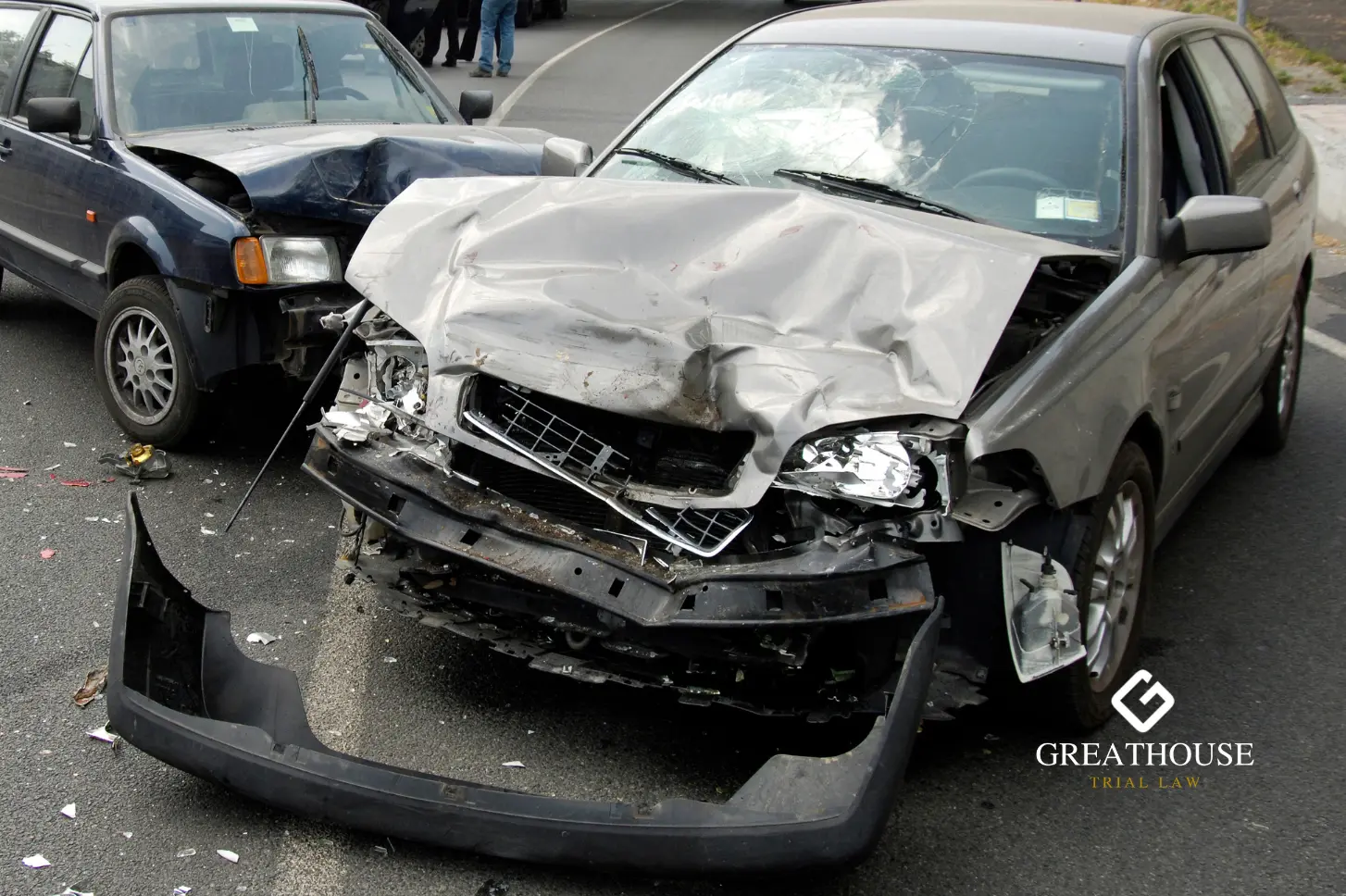
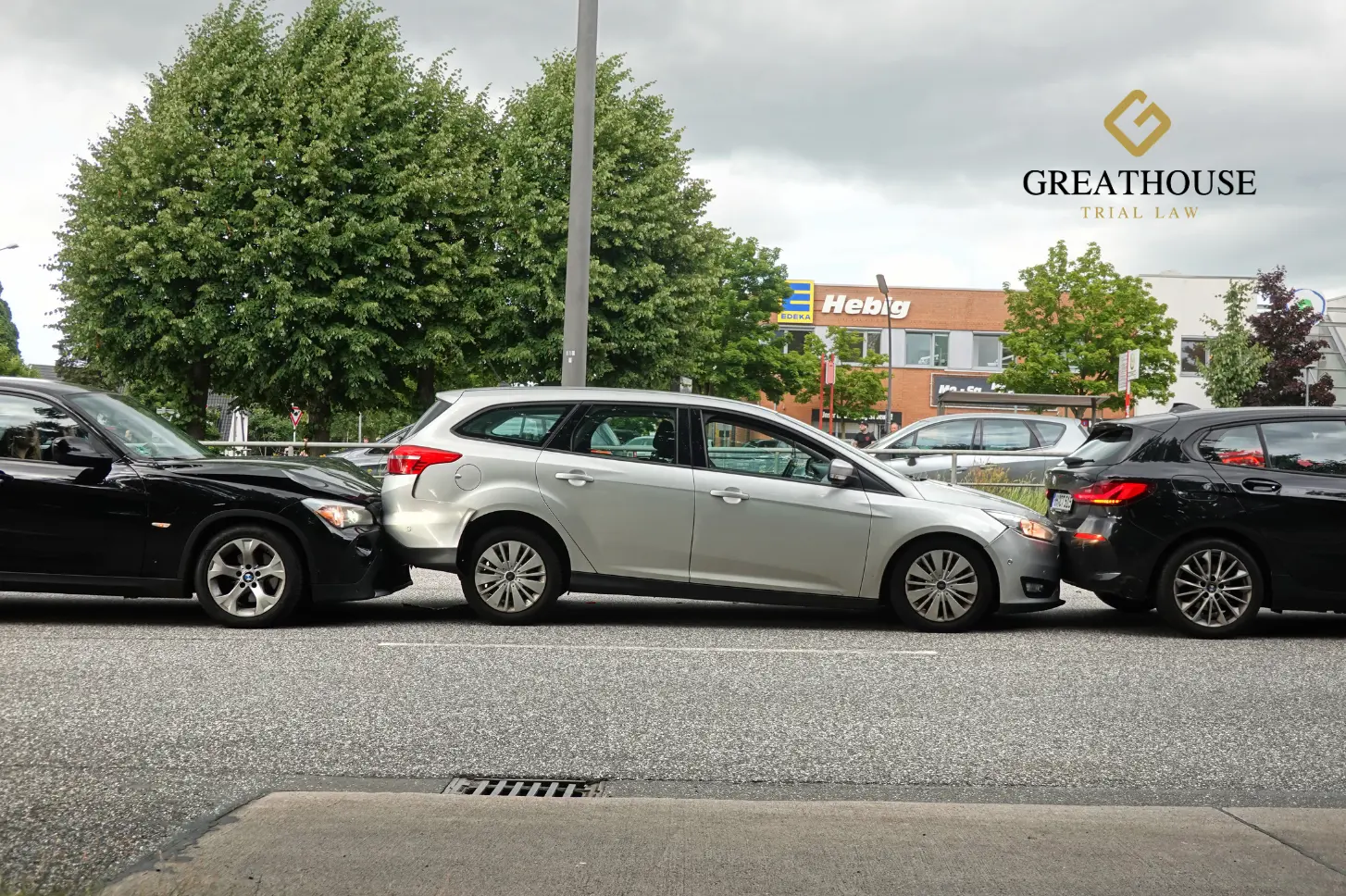
Rear-end collisions are one of the most common car accident scenarios in metro Atlanta, especially in heavy traffic where cars are moving in the same direction.
At first, these cases appear open and shut. One driver hits another from behind, and fault seems obvious. But once insurance adjusters get involved, that changes.
They may start questioning how the collision occurred. Was there a sudden stop? Were there visibility issues? Was the following distance actually unsafe, or was something else going on?
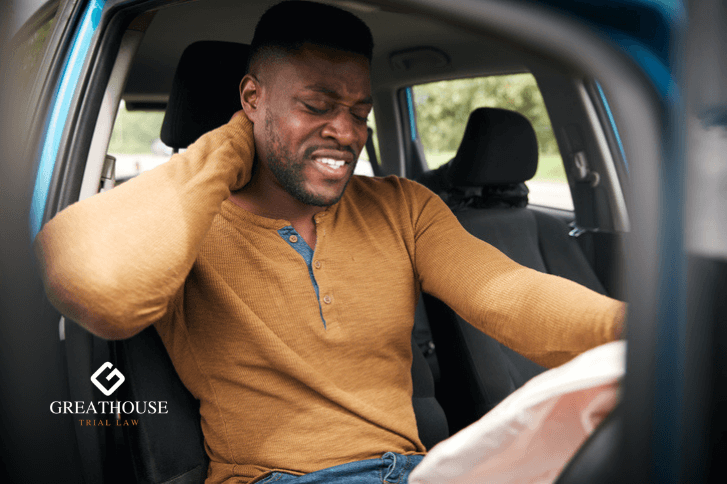
These car accidents often lead to injuries that take time to develop. What starts as mild discomfort can turn into physical pain, stiffness, and the need for ongoing medical treatment or physical therapy. That delay is something insurance companies pay close attention to when reviewing car accident claims.
T-Bone Accidents Turn on One Question: Who Had the Right of Way
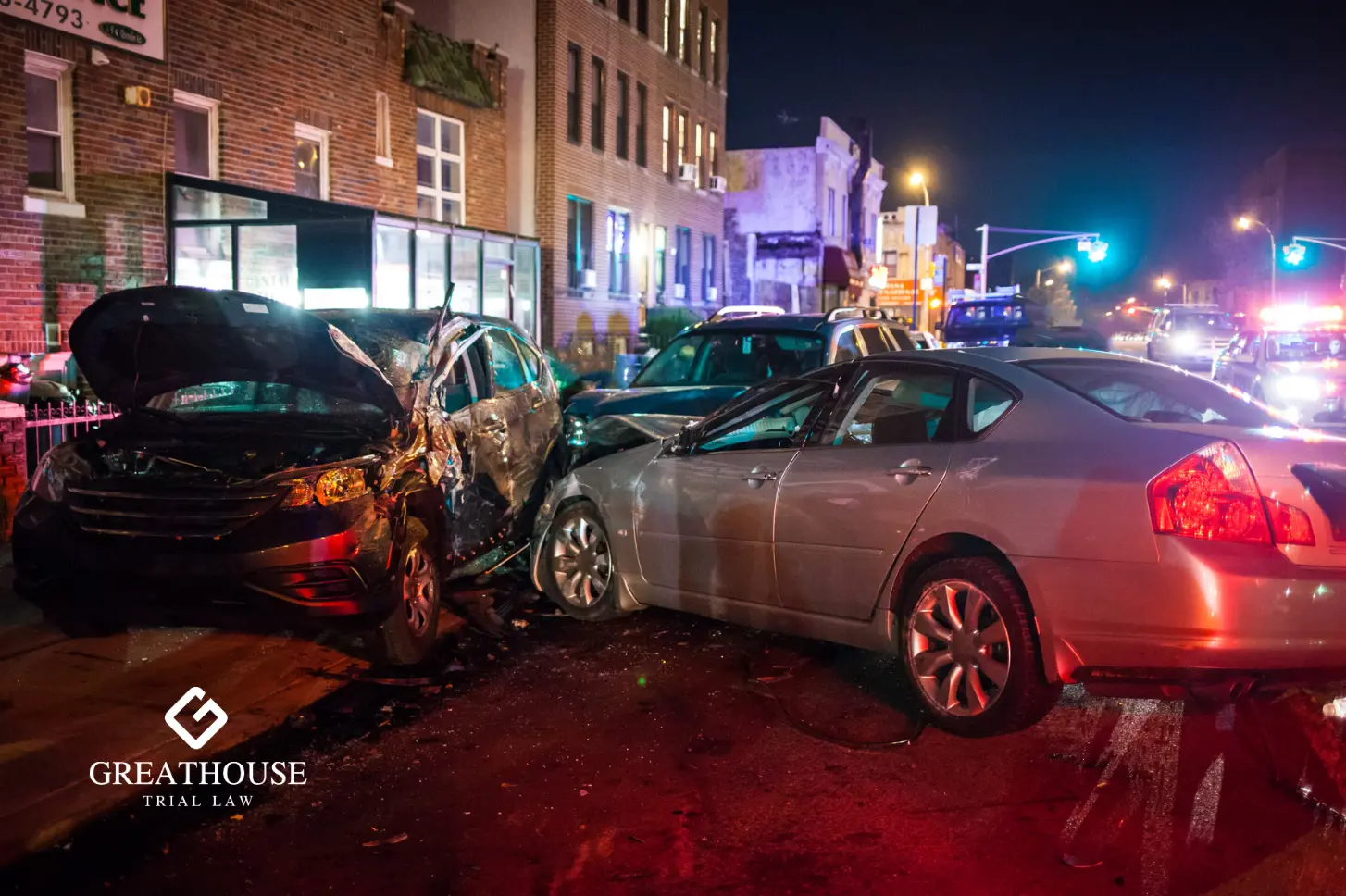
A T-bone accident usually happens at an intersection, often when drivers fail to observe a red light or stop sign. One driver moves forward believing they have the right of way. Another does the same. The vehicles collide from the side.
In these car accident cases, everything comes down to timing and traffic rules. One driver is typically considered the at-fault driver, but proving that is not always as clear as it sounds.
Without strong evidence, both sides may argue their position. Insurance companies rely heavily on the police report, witness statements, and any available footage to reconstruct how the collision occurred.
Because of the angle of impact, T-bone car crashes are more likely to cause serious injuries, even at lower speeds.
Head-On Collisions Are Often Life-Changing Events
Head-on collisions are among the most serious accidents on Atlanta roads. Two vehicles collide while traveling in opposite directions, often with very little warning.
These crashes are frequently tied to:
Drunk driving or impaired drivers crossing into oncoming lanes (nationally, NHTSA reports that alcohol-impaired drivers were involved in 30% of all U.S. traffic fatalities in 2024, the most recent full-year data available)
Distracted driving at high speeds (national NHTSA data shows distracted driving claimed 3,208 lives in 2024, the most recent full-year data available)
Drivers who fail to observe lane markings or wrong-way signs
Fatigue-related loss of vehicle control
The force involved means injuries are often severe. You may be dealing with long-term medical treatment, loss of future earning capacity, lost wages, and future medical expenses that extend far beyond the initial accident.
Insurance companies understand the potential value of these cases. That often means a more aggressive approach when evaluating insurance claims tied to serious accidents. This is also where policy limits become a real factor in what compensation is actually available to you.
Sideswipe Accidents Can Turn Into Disputes Quickly
Sideswipe accidents happen when vehicles traveling in adjacent lanes make contact, often during a lane change or in a blind spot.
These car crashes don’t always look serious at first. The vehicle damage may appear minimal. But the issue isn’t the visible damage. It’s what caused the contact in the first place.
Both drivers may claim the other moved into their lane, which makes determining fault far more complicated than in other types of automobile crashes. When one vehicle is involved in a side-impact dispute without a clear witness, insurers often reach conflicting conclusions.
These cases rely on small details:
The position of the cars involved at the time of impact
Witness accounts and traffic camera footage
How the collision occurred based on paint transfer and damage patterns
Whether either driver received a citation at the accident scene
Multi-Vehicle Accidents Create Confusion and Competing Claims
When multiple vehicles are involved, the situation changes entirely. These accidents often happen on highways or in heavy traffic where one collision sets off a chain reaction involving other vehicles.
What makes these cases difficult is not just the number of cars involved. It’s the number of different versions of what happened.
Each driver may point to someone else as the at-fault party. Insurance companies review each version while trying to limit their own exposure. Instead of a single personal injury claim, you may be dealing with:
Multiple insurance claims across several carriers
Overlapping coverage and policy limits questions
Competing accounts of how the collision occurred
Disputes over how liability should be divided among all drivers and vehicles involved
Recovering damages in a multi-vehicle car accident case often requires legal representation to cut through the competing claims.
Single-Vehicle Accidents Are Not Always What They Seem
A single-vehicle accident may look simple on the surface. One car leaves the road or crashes without another vehicle present. But that doesn’t always mean one driver is fully responsible.
There are situations where another driver contributes to the crash without staying at the accident scene. There may also be road hazards, weather conditions, or dangerous road design that played a role. In some cases, a defective vehicle component is the cause.
Even when only one vehicle is involved, these accidents can still lead to serious injuries, significant emotional distress, and a complex personal injury case depending on what caused the loss of control.
Rollover Accidents Often Involve Severe Injuries
Rollover accidents are among the most dangerous types of car crashes. A vehicle flips, sometimes multiple times, after impact or sudden loss of control.
These accidents often involve:
High speeds or sharp changes in direction
Another vehicle forcing the rollover through a collision
Top-heavy vehicles that become unstable during evasive maneuvers
Tire blowouts or road hazards
The injuries in rollover accidents are often severe. You may be dealing with severe physical injuries, extended medical treatment, emotional trauma, and long-term care needs.
Because of that severity, insurance companies tend to examine these claims closely, particularly when trying to determine how the rollover began and which driver or party bears responsibility.
Why Two Accidents That Look the Same Can Lead to Very Different Claims
The type of accident you were involved in is not just a detail. It shapes how your entire situation is evaluated.
It affects how fault is assigned, how insurance adjusters approach your claim, and how your injuries are viewed within the legal system. Two accidents may look similar at first but lead to very different outcomes depending on how they occurred and what evidence is available.
How Fault Is Determined Under Georgia Law
When people ask who is at fault in a car accident in Georgia, the answer is rarely immediate. Georgia operates as an at-fault state. That means the at-fault driver is responsible for damages, including medical bills, property damage, and other losses.
But fault is not always assigned to just one driver. Under O.C.G.A. § 51-12-33, Georgia follows a modified comparative negligence rule: if you are found less than 50% at fault, you can still recover damages, but your award is reduced by your percentage of fault. If you are found to be exactly 50% at fault, or more, you recover nothing. This surprises many people who assume a 50/50 split means they receive half. However, under Georgia law, it means zero. That threshold can directly affect how much compensation you may be able to recover.
To determine fault, insurance companies and attorneys look at:
The police report and any citations issued
Medical records tied to your injuries
Statements from drivers and witnesses
Physical evidence from the accident scene
Policy limits and available coverage across all vehicles involved
Georgia’s two-year statute of limitations under O.C.G.A. § 9-3-33also means the clock starts running from the date of the accident. Missing that window generally bars any personal injury claim, regardless of the strength of your case.
What to Do After Any Type of Car Accident
Knowing what to do after a car accident in Atlantacan directly affect your personal injury claim. This is a challenging time, and the steps you take in the days that follow matter.
Start with the basics:
Get medical care, even if you feel fine initially
Report the accident and exchange information with the other driver
Document the accident scene with photos before anything is moved
Avoid giving recorded statements to insurance adjusters before speaking with a car accident lawyer
Keep records of all medical treatment, lost wages, and other losses
Early conversations with insurance adjusters can influence how your claim is handled. Taking the right steps early preserves key evidence and protects your legal rights and your ability to seek maximum compensation.
Frequently Asked Questions
Q: How long does a car accident claim take to resolve in Georgia?
A: There’s no standard timeline. A straightforward claim with clear liability and limited injuries may resolve in a few months. Cases involving serious injuries, disputed fault, or multiple vehicles involved can take a year or longer, particularly if the case goes to litigation. The complexity of your specific accident type plays a direct role in how long the process runs.
Q: What if the at-fault driver doesn’t have enough insurance to cover my damages?
A: This is where your own policy becomes relevant. Uninsured and underinsured motorist coverage can bridge the gap when the other driver’s policy limits don’t cover your medical bills, lost wages, or loss of future earning capacity. Reviewing your own coverage early in the process matters more than most people realize.
Q: Can I still recover damages if I was partially at fault for the accident?
A: In many cases, yes. Georgia’s modified comparative negligence rule allows you to recover damages as long as your share of fault is less than 50%. Your recovery is reduced by your percentage of fault, but it is not eliminated unless you reach that 50% threshold.
Q: What if I didn’t feel injured at the accident scene but started having symptoms days later?
A: This is common, particularly in rear-end collisions and sideswipe accidents. Symptoms like stiffness, headaches, and pain can take days to surface. Getting medical care as soon as symptoms appear creates a record that connects your injuries to the accident, which matters significantly when insurance companies review your car accident claim.
Q: Does the type of accident affect how insurance companies calculate my settlement offer?
A: Yes. Insurers evaluate accident type, severity, fault complexity, and injury patterns when calculating offers. Head-on collisions and rollovers typically draw more scrutiny because of the potential for severe injuries and higher damages. Sideswipe and single-vehicle accidents often involve disputed liability, which insurers use to justify lower initial offers. Knowing what type of case you have helps you evaluate whether an offer reflects what your claim is actually worth.
Your Next Step After an Atlanta Car Accident
Insurance companies have claims adjusters, accident reconstruction teams, and lawyers working their side of your case from the moment the crash is reported. You should have the same level of attention working for you.
At Greathouse Trial Law, LLC, our Atlanta car accident lawyers have gone up against insurers on cases involving every type of collision covered in this blog, from contested rear-end claims to catastrophic head-on crashes. We know how these cases are built, where adjusters look for weaknesses, and what it takes to recover maximum compensation for serious injuries, lost income, and long-term medical costs.
There’s no obligation to call. If you’ve been in a car accident in Atlanta and you’re not sure where you stand, that conversation is free. Our car accident lawyers handle personal injury cases on a contingency fee basis, so you pay nothing unless we win. Call (678) 310-2827 or complete our confidential online form to schedule your free consultation.
Discover why it’s Greater with Greathouse Trial Law!




Related reading
How to File a Farm Bureau Accident Claim After a Car Crash in Atlanta, Georgia
A car accident in Atlanta can leave you dealing with vehicle damage, mounting medical bills, and an insurance process you were not prepared for. If Farm Bureau is involved, whether as your own insurer or the at-fault driver’s, knowing how to file your Farm Bureau accident claim correctly from the start can make a real […]
Read article →
When to Get a Lawyer for a Car Accident in Atlanta, Georgia
If you just had a car accident in Atlanta, here’s the honest truth: Most people wait too long to call a lawyer. Knowing when to get a lawyer for a car accident can protect your claim from the start. You might assume your insurance company will handle the medical bills and vehicle damage, or you […]
Read article →
When is a Car Considered a Total Loss in Atlanta, Georgia?
You don’t expect a normal drive through Atlanta to end with your car smashed, your day interrupted, and an insurance adjuster telling you the repairs cost more than the vehicle is worth. A total loss can do more than ruin your day. One moment you’re dealing with the shock of the car crash, and the […]
Read article →