

Truck Accident Lawyer in Atlanta, Georgia
Greathouse Trial Law helps people hurt in commercial vehicle crashes work with a truck accident lawyer who can investigate what happened, handle insurance companies, and pursue compensation for medical bills, lost wages, and other losses. Our team supports injured motorists and families throughout Atlanta and the surrounding metro area while they focus on recovery.
Pursuing Accountability With a Truck Accident Lawyer in Atlanta, Georgia
A truck accident lawyer can help when a collision with a commercial vehicle leaves you facing serious injuries, medical bills, missed work, and pressure from insurance companies. Truck accident victims may require hospitalization, rehabilitation, or continued treatment while also worrying about how they will support themselves and their families. At the same time, trucking companies and their insurers may begin investigating the crash and looking for ways to dispute liability or reduce what they pay.
Greathouse Trial Law helps injured people take on those legal and insurance issues. Our team handles cases involving driver fatigue, overloaded trailers, improper vehicle maintenance, distracted driving, and violations of federal safety regulations. We can investigate the crash, preserve relevant trucking records, communicate with insurance adjusters, and respond when trucking companies attempt to shift fault onto drivers of passenger vehicles.
If you or a family member suffered injuries in a commercial vehicle collision, call (678) 310-2827 or complete our confidential online form to schedule a free consultation today.
Key Takeaways
Several points can help you see why truck accident cases may require a broader investigation than ordinary car accidents:
- Depending on the circumstances, potentially liable parties can include the truck driver, trucking company, maintenance contractor, cargo-loading business, or vehicle manufacturer.
- Driver logs, electronic data, inspection reports, maintenance records, dispatch information, and cargo documents can provide important information about a truck wreck.
- Commercial motor carriers and drivers operate under Federal Motor Carrier Safety Regulations concerning driver qualifications, hours of service, vehicle maintenance, and other safety obligations.
- State statutes govern issues such as comparative fault, damages, and the time available to file many personal injury claims.
- A truck accident attorney can identify records that may need to be preserved before they are lost, overwritten, or discarded through ordinary business practices.
What Commercial Trucking Injury Claims Actually Are
Under Georgia law and applicable federal transportation regulations, a truck accident claim may involve commercial vehicles operating in interstate or intrastate commerce. 49 C.F.R. Part 390 establishes the general applicability and requirements of the Federal Motor Carrier Safety Regulations for covered motor carriers, drivers, and commercial vehicles. Drivers subject to federal hours-of-service requirements must also comply with the limits established under 49 C.F.R. Part 395.
These rules can become relevant when driver fatigue, excessive driving time, vehicle maintenance, or other safety concerns contributed to a truck accident.
Unlike many car accidents, commercial truck accident cases can involve federal safety regulations, company records, commercial insurance, and more than one potentially responsible business. A trucking accident lawyer can investigate those issues and determine which laws, records, and parties may affect the claim.
Commercial truck accident claims can arise from several types of crashes, including:
- Direct Collisions: Large trucks may strike passenger vehicles from the front, side, or rear.
- Underride or Override Crashes: A smaller vehicle may travel beneath a trailer, or a truck may ride over part of a passenger vehicle.
- Jackknife Accidents: A tractor and trailer may fold toward each other and block nearby lanes.
- Cargo Spill Accidents: Improperly loaded or unsecured cargo may shift, fall, or affect vehicle stability.
Ways Corporate Liability May Arise in Commercial Truck Crashes
Employer Liability Under Respondeat Superior
Under O.C.G.A. § 51-2-2, a trucking company can be responsible for a driver’s negligence when the driver was performing work for the company at the time of the crash. For example, if the driver was making a delivery, following company instructions, or carrying out other job duties, the company can also face liability.
Georgia courts continue to apply this rule when deciding whether a driver was acting within the scope of employment and in furtherance of the employer’s business.
Direct Negligence in Hiring and Retention
A second form of liability can involve the trucking company’s own conduct in hiring or retaining a driver. Federal regulations under 49 C.F.R. Part 391 addresses driver qualifications, driving-record inquiries, safety-performance history, and driver qualification files. Separate federal rules under 49 C.F.R. Part 382 governs controlled-substance and alcohol testing for covered drivers and employers.
Under Georgia law, negligent hiring or retention generally focuses on whether an employer knew or should have known that an employee posed a foreseeable risk of the type of harm that occurred. Evidence involving prior driving violations, qualification problems, safety history, or other warning signs may therefore become relevant in certain truck accident cases.
Vehicle Inspection and Maintenance Duties
A third area of potential liability involves the motor carrier’s responsibility for vehicle inspection, repair, and maintenance. Under 49 C.F.R. § 396.3, motor carriers must systematically inspect, repair, and maintain, or cause those tasks to be performed, for vehicles subject to their control. Safety-related parts and accessories must also remain in proper operating condition.
If worn brakes, damaged tires, steering problems, or another maintenance issue contributed to a truck crash, a truck accident lawyer can review inspection records, repair histories, and the responsibilities of the motor carrier and any outside maintenance company involved. Liability would depend on who controlled the vehicle, what work was performed, and how the mechanical problem contributed to the collision.
Potential Liable Entities in a Tractor-Trailer Collision
Commercial Motor Carriers
Motor carriers manage fleet operations, delivery schedules, driver supervision, and safety practices. When a carrier pressures a truck driver to exceed federal hours-of-service limits, ignores safety problems, or fails to address other unsafe practices, the company’s conduct may become part of a truck accident claim. Commercial liability insurance can also apply when covered fleet operations contribute to serious injuries.
Freight Brokers and Logistics Coordinators
Freight brokers help connect trucking companies with businesses that need cargo transported. If a broker chooses a trucking company with known safety problems or warning signs, the broker may also face liability for that decision.
Federal law does not automatically block certain state-law claims against freight brokers for choosing an unsafe motor carrier. Liability still depends on the facts of the case and the law that applies.
Cargo Loading Facilities and Shippers
Cargo loading facilities and shippers may play a role when freight is improperly distributed or restrained. Unbalanced or unsecured cargo can shift during transit, affect a tractor trailer’s stability, contribute to a rollover, or spill onto the roadway. If negligent loading or cargo handling contributed to the crash, the company responsible for that work may also face liability.
Maintenance Contractors and Component Manufacturers
Independent repair facilities may face liability when negligent maintenance or repair work contributes to a mechanical failure and truck crash. For example, an investigation can examine brake work, tires, steering components, or other safety-related systems.
A manufacturer may also face a product liability claim when a defective truck or component contributed to the collision. Liability depends on the evidence showing what failed, why it failed, and how that failure contributed to the injuries.
Common Reasons Trucking Claims Are Denied or Contested
Allegations of Comparative Fault Against the Passenger Vehicle Driver
Insurance companies for trucking companies may try to shift part of the responsibility onto the injured passenger vehicle driver. Defense attorneys can argue that the car was traveling in the truck’s blind spot, changed lanes suddenly, followed too closely, or failed to brake in time.
Under O.C.G.A. § 51-12-33, an injured person’s damages can be reduced based on their percentage of fault. If the injured person is found 50% or more responsible, they cannot recover damages under that rule.
Claims Involving Pre-Existing Physical Conditions
Insurance companies may review prior medical records and argue that symptoms such as back pain, joint problems, or spinal conditions existed before the tractor trailer crash.
A pre-existing condition does not automatically prevent an injured person from pursuing a claim. Georgia law allows damages when a defendant’s negligence aggravates or worsens an existing condition. Medical records and testimony from treating providers can help show how the person’s condition changed after the collision.
Disputes Over Driver Employment Status
Trucking companies may argue that a commercial driver was an independent contractor rather than an employee in an effort to dispute vicarious liability.
The label placed on the working relationship does not necessarily decide the issue. Georgia courts can examine whether the company had the right to control how the driver performed the work, including the time, manner, and method of the job. Contracts, dispatch records, company policies, vehicle requirements, and other evidence can help show how much control the business exercised.
Disputes Over Ongoing Medical Treatment
Insurance adjusters may question the length, cost, or connection of medical treatment to the truck accident. They can argue that certain procedures, therapy, or other care was unrelated to the crash or more extensive than the injuries required.
Medical records, treatment plans, billing records, and statements from healthcare providers can help document the injuries, treatment, and losses connected to the collision.
Benefits of Working With a Truck Accident Attorney in Atlanta, Georgia
Working with a trucking accident attorney can help you address the legal, insurance, and evidence issues that often follow a commercial vehicle crash:
- Electronic Data Preservation: An attorney can send preservation notices seeking to protect relevant engine control module data, electronic logging device files, GPS records, and other electronic information before it is lost or overwritten.
- Regulatory Compliance Review: Your legal team can review Federal Motor Carrier Safety Administration records, driver qualification files, inspection reports, and other records for possible safety violations.
- Multi-Party Liability Analysis: A truck accident attorney can investigate carriers, brokers, shippers, maintenance vendors, and other potentially responsible parties, along with the insurance coverage connected to them.
- Damage Evaluation: Medical bills, lost wages, future medical needs, reduced earning capacity, pain and suffering, and other supported losses can be evaluated as part of the claim.
- Litigation Preparation: Preparing the case for possible litigation can help the legal team respond to disputes from trucking companies and insurance carriers during settlement discussions.
How the Truck Accident Claim Process Works With Greathouse Trial Law
Greathouse Trial Law can guide you through each stage of a truck accident claim, from the initial case review through settlement discussions or litigation:
Step 1: Initial Case Review and Evaluation
Your case begins with a free conversation about the collision, your injuries, and the circumstances surrounding the crash. During this meeting, Greathouse Trial Law reviews available information, discusses potential legal issues, identifies possible sources of compensation, and explains the next steps. Early evaluation can also help identify evidence that should be preserved before it is lost.
Step 2: Spoliation Notice and Evidence Preservation
Formal preservation notices can be sent to the motor carrier and other relevant parties seeking to protect black box data, driver logs, maintenance records, dashcam footage, and other evidence connected to the crash.
Step 3: Regulatory and Scene Investigation
The legal team can review physical evidence from the scene, vehicle damage, accident reports, driver records, and safety compliance histories. Accident reconstruction professionals or other qualified professionals can also assist when their analysis is useful.
Step 4: Damage Documentation and Medical Evaluation
Medical records, itemized bills, treatment plans, lost wage information, and other documentation can help show how the injuries have affected your health and finances.
Step 5: Settlement Demand Preparation
Once enough information is available, the legal team can prepare a demand that explains the evidence, liability issues, injuries, and financial losses and present it to the appropriate insurance companies.
Step 6: Settlement Negotiations or Civil Litigation
The attorneys can negotiate directly with insurance representatives. If the parties cannot reach an acceptable resolution, filing a lawsuit can move the claim into discovery, depositions, motions, mediation, and potentially trial.
Commercial Transportation Matters We Handle
Greathouse Trial Law handles truck accident claims involving a range of commercial vehicles and crash circumstances. An 18-wheeler accident lawyer can also investigate crashes involving tractor trailers, semi trucks, big rigs, and other large commercial vehicles:
- Interstate Tractor-Trailer Crashes
- Delivery Truck and Local Fleet Collisions
- Jackknife and Rollover Accidents
- Underride Crashes
- Fatigue-Related Truck Accidents
- Overloaded or Improperly Loaded Trucks
Why Work With Greathouse Trial Law
A collision with a commercial truck can leave you dealing with serious injuries, missed work, medical bills, and pressure from insurance companies. Greathouse Trial Law provides steady legal support during this difficult time by handling the insurance and legal issues connected to your claim. Our goal is to take that burden off your shoulders so you can focus on your health and recovery.
Our team represents injured people in personal injury and wrongful death matters throughout Atlanta and surrounding Georgia communities. Our legal team investigates the conduct of truck drivers, trucking companies, and other potentially responsible parties, reviews evidence, deals with insurance companies, and prepares claims for settlement discussions or litigation when appropriate.
We explain the legal process in everyday language, keep you informed about your case, and work to pursue accountability from negligent parties while you focus on moving forward.
Greater With Greathouse: Protect Your Rights After a Truck Accident
Taking prompt legal action after a tractor trailer collision can help preserve time-sensitive electronic data, witness information, and other evidence while also giving your legal team time to review applicable filing deadlines. Waiting too long can make certain records, electronic data, or crash-scene evidence harder to locate or preserve. Reaching out to a lawyer early can help you learn about your legal options and make informed decisions while you focus on your recovery.
Call (678) 310-2827 or complete our confidential online form to schedule a free consultation today. Greathouse Trial Law represents injured motorists throughout Fulton County and surrounding communities. Working with a truck accident attorney in Atlanta, Georgia can give you legal support as you pursue compensation for the losses connected to your crash.
Discover why it’s Greater with Greathouse Trial Law!
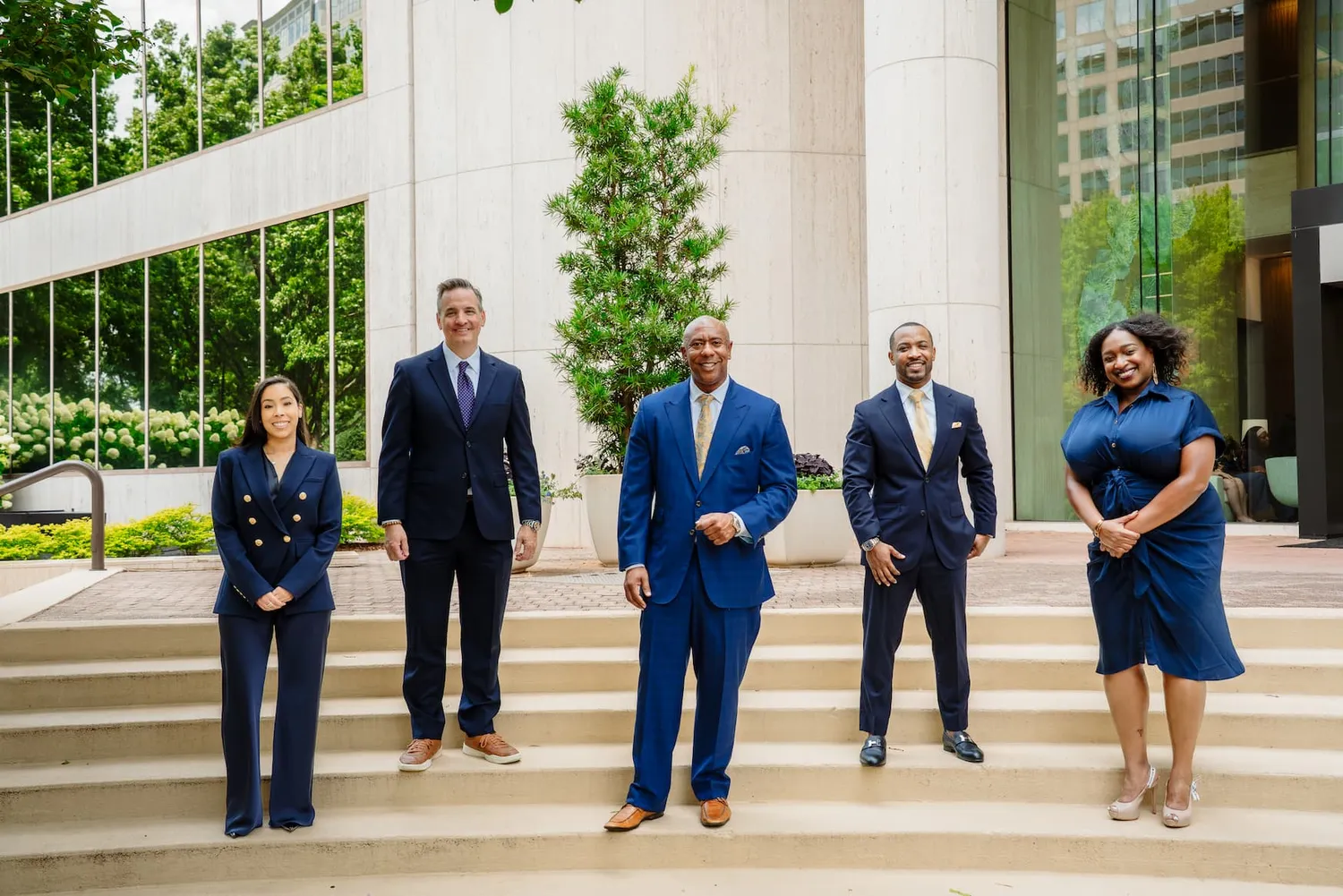
Why Choose Greathouse Trial Law
Free Consultation — Tell us what happened and see if you have a case and what it might be worth. We do consultations by phone and virtually.
Highly Reviewed & Rated — Over 100 Google reviews. 10.0/10.0 with a 5-star rating on respected legal website Avvo.
Highly Responsive — We pride ourselves on fast response times. We will never let your questions or concerns go unaddressed.
Efficient — Our approach focuses on efficiency and speed to resolve cases as quickly as we can to get you your money faster.
No Case Is Too Difficult or Complex — This is where tenacity and knowledge of the law matter. We do what is necessary even in difficult cases.
Straight Shooters — You've made an important decision in your life, and we respect you for that. We work to get your life back to normal sooner.
Caring & Compassionate (truly) — We're sorry for what happened to you or your loved one. Our team truly understands the toll a personal injury takes on a family.
Personalized Attention — We understand that every client's needs are unique. We treat all of our clients with the attention they deserve.
We Keep You Updated — Transparency is key. We want you to know what's happening with your case at every point in the process.
Flexible Meeting Times — To accommodate your busy schedule.
No Fee Unless You Win — No attorney fees or costs unless we win your case.
Atlanta & All Georgia — Our office is in Atlanta, but we accept cases everywhere in Georgia.
2nd Opinions Available — Already have a lawyer? Let us provide a second opinion on your case.
Available 24/7 — We answer the phone 24 hours a day, 7 days a week. You may also contact us by the form on this page.


Related reading

What to Expect Legally After a Georgia Truck Accident
Truck accidents, unfortunately, occur all too frequently, leaving a trail of devastation in their wake. These incidents pose a significant threat on our roads, causing physical and emotional trauma, and often leading to substantial financial burdens for victims and their families. While the specific causes of each accident may vary, the consequences can be life-altering […]
Read article →
What To Do After a Truck Accident in Georgia
The Greater Atlanta area has many truck accident hotspots, especially along Interstate 85 and the I-285 Perimeter. The leading Georgia counties for traffic fatalities are in the Atlanta Metro area: Fulton, DeKalb, Cobb, and Gwinnett, which together had 23% of the state’s 2020 fatalities. That year, Georgia had 234 fatalities involving a large truck. 2019 […]
Read article →
What to Do After a Commercial Truck Accident in Georgia
Car accidents are jarring, regardless of the size of the vehicles. However, accidents involving commercial trucks can cause life-altering damage to both your mental and physical health. Because tractor trailers are so much larger than standard cars, they can cause devastation in the event of an accident. Here is what to do if you find […]
Read article →
Frequently Asked Questions About Truck Accident
What should I do immediately after being hit by a commercial truck?+
Seek appropriate medical care, call law enforcement, and document the scene if you can do so safely. Photos of the vehicles, road conditions, visible injuries, and surrounding area can help preserve useful information. Exchange contact and insurance information, and consider speaking with a truck accident lawyer before giving a detailed statement to the trucking company’s insurer.
How long do I have to file a truck accident lawsuit in Georgia?+
Under O.C.G.A. § 9-3-33, personal injury actions in Georgia generally have a two-year filing period. The exact deadline can depend on the facts of the claim, the parties involved, and whether another rule affects the time available. Missing an applicable deadline can prevent an injured person from pursuing the claim in court.
What is black box data and why is it important?+
Some commercial trucks contain electronic systems that record information about vehicle operation. Depending on the truck and the system involved, available data can include speed, braking, engine activity, or other information from around the time of the crash. A truck accident attorney can investigate what electronic data exists and whether it can help explain how the collision happened.
Who can be held liable for a commercial truck collision?+
Potentially liable parties can include the truck driver, commercial motor carrier, freight broker, cargo-loading company, maintenance contractor, or component manufacturer. Responsibility depends on what caused the collision and the role each person or business played.
What happens if the trucking company is based in another state?+
A trucking company does not have to be based in Georgia for an injured person to pursue a claim after a crash in Georgia. Where a lawsuit can be filed depends on the facts of the case and the parties involved. Federal trucking regulations can also apply to interstate motor carriers, even when the company is headquartered in another state.
Can I pursue compensation if I was partially at fault for the crash?+
Georgia follows what is commonly called a modified comparative fault system. If an injured person is less than 50% responsible, the damages awarded are reduced according to that person’s percentage of fault. A person found 50% or more responsible cannot recover damages under that provision.
What regulations govern commercial truck drivers?+
Covered commercial drivers and motor carriers are subject to Federal Motor Carrier Safety Regulations addressing areas such as hours of service, driver qualifications, vehicle inspection and maintenance, drug and alcohol testing, and other operational requirements. The specific rules that apply depend on the driver, vehicle, carrier, and type of operation.
How are truck accident claims different from standard car crash claims?+
Truck accident claims can involve federal safety regulations, commercial insurance, several potentially responsible businesses, driver qualification records, electronic data, maintenance records, and other company documents that are less common in many car accident claims. These additional issues can make the investigation more involved.
Should I sign a release form sent by the trucking company’s insurance carrier?+
It is wise to review a release or settlement agreement carefully before signing it. These documents can affect your ability to pursue additional compensation later, including for medical needs that were not fully known when the offer was made. A lawyer can explain what the document means and how signing it could affect your claim.
Injured? Talk to a truck accident lawyer in atlanta, georgia attorney today.
Free consultation. No fee unless we win.