
Workers' Compensation Lawyer in Atlanta, Georgia
Riah Greathouse of Greathouse Trial Law, LLC fights for justice, helping Atlanta workers recover benefits for work-related injuries and illnesses.
A workplace injury can leave you facing pain, missed work, and growing expenses. A workers' compensation lawyer at Greathouse Trial Law helps injured workers across Atlanta pursue medical care and wage replacement under Georgia law.
A Workers' Compensation Lawyer Can Help When a Claim Becomes Difficult
A workers' compensation lawyer can help when a workplace injury leaves you facing medical bills, lost wages, treatment concerns, and pressure from an insurance company. These challenges can become even harder to manage because Georgia's workers' compensation system involves reporting requirements, filing deadlines, medical rules, and benefit procedures that may affect your claim while you are focused on recovery.
Greathouse Trial Law can review medical and wage records, prepare required filings, document work restrictions, and respond when an insurance company delays or denies a workers' compensation claim. Legal support can also help address disputes involving medical treatment, average weekly wage calculations, and other workers' comp benefits.
If you were hurt at work in Atlanta, call (678) 310-2827 or complete our confidential online form to schedule a free consultation today.
Key Takeaways
Several points can help injured workers recognize what matters after a workplace accident:
- Depending on the circumstances, workers’ comp benefits may include authorized medical treatment, temporary disability income, permanent partial disability benefits, rehabilitation services, and certain death benefits.
- Georgia generally requires an injured employee to report an accident within 30 days, and separate filing deadlines may apply to a workers’ comp claim.
- Employers generally provide an authorized panel of physicians or another approved medical arrangement for workplace injury treatment.
- If a workers’ compensation claim is denied or disputed, an injured worker can request mediation or a hearing.
- Atlanta workers’ compensation lawyers can review wage calculations, gather medical documentation, communicate with the insurance company, prepare evidence, and handle disputed workers’ compensation cases.
What Workers' Comp Actually Is
Workers' compensation is a no-fault insurance system under Georgia law that can provide medical treatment and wage replacement when an employee suffers a qualifying work-related injury.
Georgia's workers' compensation law generally applies to businesses with three or more employees, and the State Board of Workers' Compensation administers claims, forms, medical-provider rules, hearings, and other disputes within the system.
Workers' compensation differs from a personal injury claim against a third party and from Social Security Disability in several practical ways:
- No-Fault System: An injured worker generally does not need to prove employer negligence to pursue workers' comp benefits. Georgia law also generally makes workers' compensation the exclusive remedy against the employer for a covered workplace injury, while preserving certain claims against third parties.
- Authorized Medical Care: Your medical treatment usually must come from a doctor on your employer's approved physician panel or through another authorized medical arrangement.
- Partial Wage Replacement: If your injury keeps you from working or reduces what you can earn, workers' compensation may pay part of your lost income based on your average weekly wage and Georgia's benefit limits.
- Separate From Social Security Disability: Social Security Disability is a separate federal benefits program with its own eligibility rules. In some situations, workers' compensation payments may reduce the amount paid through Social Security Disability.
Types of Workers' Comp Benefits Available
Georgia workers' compensation provides several types of benefits depending on the injury, medical needs, ability to work, and other circumstances.
Medical Benefits
Employers must provide reasonable and necessary medical treatment for a compensable job injury under O.C.G.A. § 34-9-200. Covered care may include medical, surgical, and hospital care, along with other treatment, services, and medical supplies prescribed by an authorized physician.
Temporary Total Disability (TTD)
Temporary total disability benefits may apply when a workplace injury keeps an employee completely out of work. Under O.C.G.A. § 34-9-261, these income benefits are based on a portion of the worker’s average weekly wage and are subject to the limits and duration rules that apply under Georgia law.
Temporary Partial Disability (TPD)
Temporary partial disability may apply when an injured worker returns to work but earns less because of injury-related limitations. Under O.C.G.A. § 34-9-262, these benefits are generally based on the difference between the worker’s pre-injury average weekly wage and the amount the worker is able to earn afterward, subject to the limits and duration rules that apply under Georgia law.
Permanent Partial Disability (PPD)
Permanent partial disability benefits may apply when a worker has a lasting impairment after reaching maximum medical improvement. Under O.C.G.A. § 34-9-263, the amount of benefits depends on the affected body part, the worker’s impairment rating, and the compensation schedule set by Georgia law.
Death Benefits
When a worker dies because of a compensable job injury, qualifying dependents can pursue death benefits under Georgia workers' compensation law. The benefits available generally depend on the worker's average weekly wage, the relationship of the dependent to the worker, and the statutory rules that apply to the claim.
What Happens After You File a Workers' Comp Claim
Reporting the Injury
An injured worker should report the workplace accident to the employer as soon as possible. Under O.C.G.A. § 34-9-80, notice generally must be given within 30 days of the accident. Notice may be oral or written, and Georgia law recognizes certain exceptions, including situations in which the employer or an appropriate representative already had knowledge of the accident.
Employer's WC-1 Filing
After a workplace injury is reported, the employer generally completes its part of Form WC-1, which records the injury and related claim information. The form is then sent to the employer’s workers’ compensation insurer or self-insurer, which completes the required sections and files it with the State Board of Workers’ Compensation.
Medical Treatment and Wage Checks
If the claim is accepted, the workers' compensation insurance company generally pays for authorized medical treatment related to the workplace injury. Income benefits may also apply if the injury keeps the employee out of work long enough to meet Georgia's waiting-period rules. If the disability continues beyond that period, payment may also include the initial waiting days.
Mediation or Hearing
When a workers' comp claim involves a denied benefit, wage dispute, medical issue, or another disagreement, a party may use Form WC-14 to request mediation or a hearing before the State Board of Workers' Compensation. A hearing is conducted before an administrative law judge, who considers the facts and Georgia workers' compensation law before deciding the disputed issues.
Appeal
A party that disagrees with an administrative law judge's award can ask the State Board's Appellate Division to review the decision. After the Board issues a final decision, the case can proceed to the proper superior court under O.C.G.A. § 34-9-105. For injuries that occur in Georgia, the appeal generally goes to the superior court in the county where the injury occurred.
Common Reasons Workers' Compensation Claims Are Denied
Late Reporting or Filing
Waiting too long to report a workplace injury or file a workers' compensation claim can create problems with the claim. Georgia generally requires notice of an accident within 30 days under O.C.G.A. § 34-9-80. A separate filing deadline applies under O.C.G.A. § 34-9-82, and the time available can depend on factors such as employer-provided remedial treatment or prior weekly benefit payments.
Disputed Causation
An insurance company can dispute whether an injury arose out of and in the course of employment. These disputes can involve questions about where the injury occurred, whether work duties contributed to the condition, or whether another medical issue caused the worker's symptoms.
Independent Contractor Status
Workers' compensation generally covers employees rather than true independent contractors. A dispute can arise when an employer classifies a worker as an independent contractor and questions whether workers' compensation coverage applies.
Pre-Existing Condition Arguments
A prior injury or medical condition can lead the insurance company to question whether the workplace injury caused the worker's current symptoms. However, a pre-existing condition does not automatically prevent a workers' compensation claim. The Georgia State Board recognizes that an aggravation of a pre-existing condition can be compensable while the aggravation continues.
Problems With Authorized Medical Treatment
Georgia workers' compensation generally follows an authorized physician system under O.C.G.A. § 34-9-201 and Board Rule 201. Missing appointments, seeking unauthorized treatment, or disputes over referrals and additional care can affect payment for medical treatment or create issues involving benefits.
Benefits of Working With a Workers' Comp Attorney in Atlanta, Georgia
Handling a workers' compensation claim without legal help is possible, but an attorney can provide support with several issues that often affect how a case moves forward:
- Accurate Wage Calculations: A workers' compensation attorney can review wage records and benefit calculations to identify errors that could affect weekly income benefits.
- Response to Denials: An attorney can prepare a WC-14 and request mediation or a hearing when an insurance company disputes a workers' compensation claim.
- Support With Catastrophic Designation: For severe injuries, an attorney can gather medical evidence and pursue catastrophic designation when the facts support it.
- Preparation for Medical Examinations: Legal counsel can help an injured worker prepare for an insurer-requested medical examination and review findings that conflict with existing medical records.
- Settlement Review: An attorney can review a proposed workers' compensation settlement in light of future medical treatment, lost income, and other benefits before the worker agrees to close the claim.
Workers' Comp Matters We Handle
Greathouse Trial Law helps injured workers across Atlanta with workers' compensation claims involving medical care, income benefits, insurance company pushback, and lasting injuries. Atlanta workers' compensation attorneys can assist with matters such as:
- Denied and Disputed Claims: Challenging an insurance company's refusal to accept a workers' compensation claim or pay available benefits.
- Wage and Income Benefit Disputes: Reviewing average weekly wage calculations and other issues that can affect the amount of income benefits paid to an injured worker.
- Serious and Permanent Injuries: Handling workers' compensation matters involving severe injuries, long-term medical needs, and permanent partial disability.
- Return-to-Work Disputes: Addressing problems that arise when an injury affects a worker's ability to return to the same job or earn the same wages.
- Permanent Impairment Issues: Reviewing permanent partial disability benefits when a workplace injury leaves lasting impairment after maximum medical improvement.
- Third-Party Injury Claims: Pursuing a separate personal injury claim when someone other than the employer contributed to the workplace accident, such as a manufacturer or another negligent party.
Why Work With Greathouse Trial Law
A workplace injury can affect far more than your paycheck. Missed work, medical bills, childcare costs, and pressure from the insurance company can add stress while you are trying to recover. Greathouse Trial Law helps injured workers address those challenges by handling the legal and insurance issues tied to a workers' compensation claim.
Led by managing partner Riah Greathouse, the team can help with claim filings, wage disputes, medical documentation, denied benefits, and settlement negotiations. That support can reduce the burden of dealing with paperwork and insurance issues while you focus on your health and recovery.
Greater With Greathouse: Take Action After a Workplace Accident
You do not have to handle a workers' compensation claim on your own. A short conversation with our team can help clarify what your case involves and what steps could come next, with no cost or pressure to move forward.
Call (678) 310-2827 or complete our confidential online form to schedule a free consultation today. Greathouse Trial Law represents injured people throughout Atlanta, Georgia, and surrounding communities.
Discover why it’s Greater with Greathouse Trial Law!
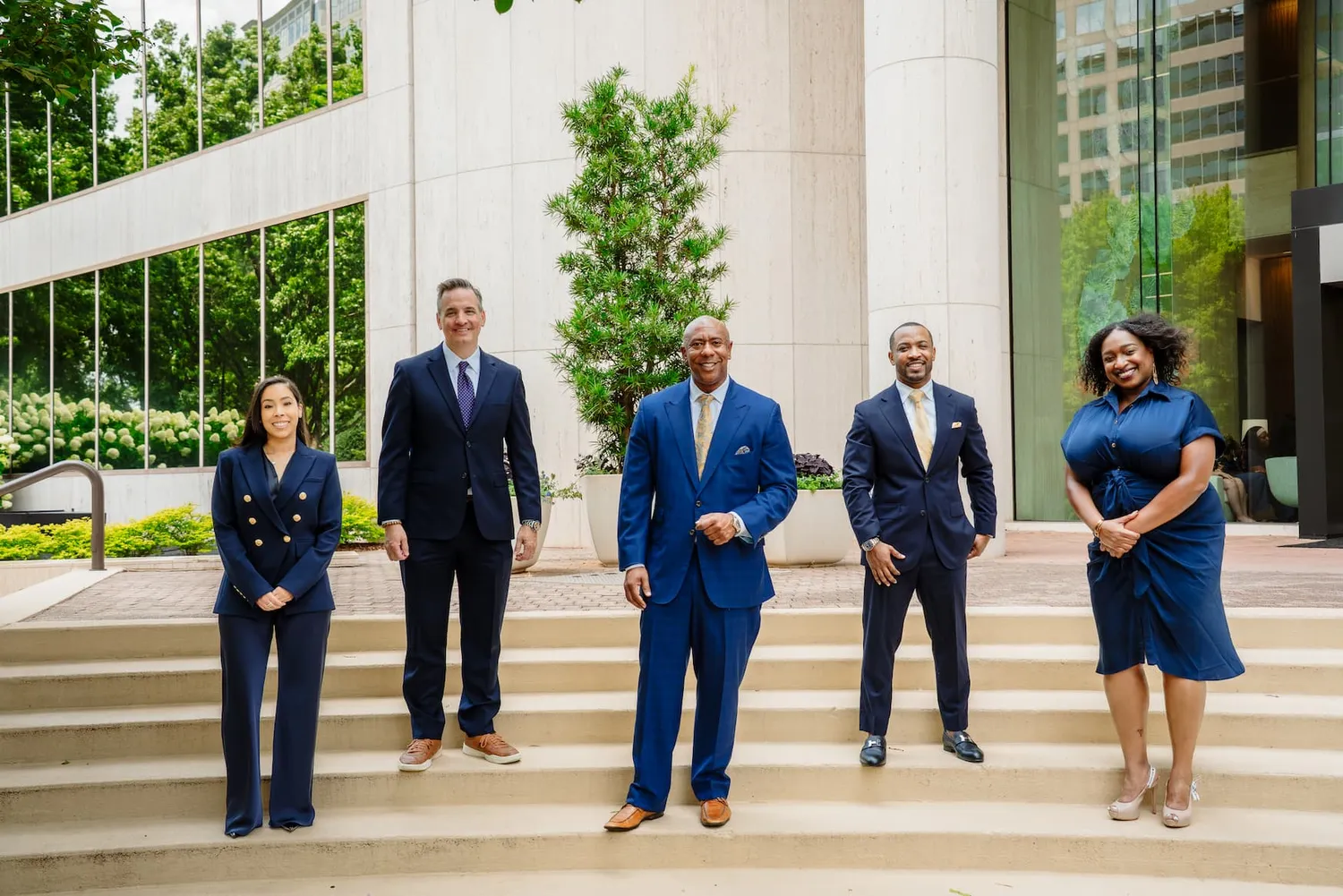
Why Choose Greathouse Trial Law
Free Consultation — Tell us what happened and see if you have a case and what it might be worth. We do consultations by phone and virtually.
Highly Reviewed & Rated — Over 100 Google reviews. 10.0/10.0 with a 5-star rating on respected legal website Avvo.
Highly Responsive — We pride ourselves on fast response times. We will never let your questions or concerns go unaddressed.
Efficient — Our approach focuses on efficiency and speed to resolve cases as quickly as we can to get you your money faster.
No Case Is Too Difficult or Complex — This is where tenacity and knowledge of the law matter. We do what is necessary even in difficult cases.
Straight Shooters — You've made an important decision in your life, and we respect you for that. We work to get your life back to normal sooner.
Caring & Compassionate (truly) — We're sorry for what happened to you or your loved one. Our team truly understands the toll a personal injury takes on a family.
Personalized Attention — We understand that every client's needs are unique. We treat all of our clients with the attention they deserve.
We Keep You Updated — Transparency is key. We want you to know what's happening with your case at every point in the process.
Flexible Meeting Times — To accommodate your busy schedule.
No Fee Unless You Win — No attorney fees or costs unless we win your case.
Atlanta & All Georgia — Our office is in Atlanta, but we accept cases everywhere in Georgia.
2nd Opinions Available — Already have a lawyer? Let us provide a second opinion on your case.
Available 24/7 — We answer the phone 24 hours a day, 7 days a week. You may also contact us by the form on this page.


Related reading

How to Find a Good Workers’ Comp Attorney in Atlanta
When you’re injured at work, you expect workers’ compensation to cover your medical treatment and provide income benefits while you recover. And in some cases, the process does run the way it should. But for many injured workers, the reality looks different: medical bills arrive before checks, claims are questioned, and the insurance company delays […]
Read article →
Common Accidents Involved in Dangerous Construction Jobs in Georgia
As a construction worker in Georgia, you play an instrumental role in shaping the infrastructure that keeps the “Peach State” thriving. Your tireless efforts ensure that our roads, bridges, and buildings remain safe and operative for everyone, and your significant contribution to rebuilding communities after natural disasters is invaluable. Despite these efforts, the nature of […]
Read article →
An Experienced Atlanta Workers’ Comp Attorney Shares the Risks Workers Face With High-Paying But Dangerous Jobs
Highly paid, dangerous jobs include those with a higher risk of injury or death than the average worker fatality rate (across all job categories). Workers in dangerous jobs may suffer from exposure to caustic and hazardous chemical fumes, high-voltage electrical shocks, or risks from heavy machinery accidents. At Greathouse Trial Law, our workers’ compensation attorney […]
Read article →


Frequently Asked Questions About Workers' Compensation
How long do I have to file a workers' comp claim in Georgia?+
Generally, a workers' compensation claim must be filed within one year of the injury under O.C.G.A. § 34-9-82. If the employer has provided remedial medical treatment, the deadline can run from the date of the last treatment. If weekly benefits have been paid, a different filing period can apply. The filing deadline can depend on the treatment and benefit history of the claim.
How much does a workers' comp lawyer cost in Atlanta?+
Georgia workers' compensation attorney fees are generally subject to Board approval and cannot exceed 25 percent of the compensation awarded or paid to the worker under O.C.G.A. § 34-9-108. Greathouse Trial Law also offers a free consultation, so there is no upfront cost for the initial conversation.
What is the maximum weekly workers' comp benefit in Georgia?+
Temporary total disability benefits are generally based on a portion of the worker's average weekly wage and are subject to the maximum weekly benefit set by Georgia law under O.C.G.A. § 34-9-261. The applicable maximum depends on the benefit rate in effect for the claim.
Do I have to see a specific doctor for my workers' comp claim?+
Generally, an injured worker must seek treatment through the employer's authorized medical arrangement. Under O.C.G.A. § 34-9-201, an employer can use a traditional panel of physicians or another Board-approved medical arrangement. Emergency treatment and problems with an employer's physician panel can affect which doctor an injured worker can see.
What happens if my employer does not have workers' comp insurance?+
Georgia generally requires businesses with three or more workers, including regular part-time workers, to carry workers' compensation insurance. If an employer that should have coverage does not carry it, an injured worker can still pursue a workers' compensation claim, and the employer can face civil and criminal penalties for failing to maintain required coverage.
Can I be fired for filing a workers' comp claim in Georgia?+
Georgia generally follows at-will employment rules, and filing a workers' compensation claim does not create a separate wrongful-termination claim under the Workers' Compensation Act. However, a termination can still affect your benefits or raise other legal issues. A workers' comp attorney can review how the termination affects your claim.
What is a catastrophic injury under Georgia workers' comp law?+
A catastrophic injury under O.C.G.A. § 34-9-200.1 can include certain spinal cord injuries, amputations, severe brain injuries, severe burns, and other injuries that prevent the worker from performing prior work or other suitable employment. Catastrophic designation can affect the duration of medical and income benefits and also provides access to rehabilitation services.
How is my average weekly wage calculated for workers' comp?+
Under O.C.G.A. § 34-9-260, Georgia uses several methods to calculate a worker's average weekly wage. The calculation can be based on the worker's recent earnings, the wages of a similar employee, or the worker's full-time weekly wage, depending on the circumstances.
Can I settle my Georgia workers' comp claim for a lump sum?+
Workers' compensation claims can be resolved through a negotiated lump-sum settlement, and stipulated settlements require approval from the Georgia State Board of Workers' Compensation. Before agreeing to a settlement, a workers' comp lawyer in Atlanta can review how the proposed terms address future medical treatment, income benefits, and other unresolved parts of the claim.
What if my workers' comp claim is denied?+
If an insurance company denies or disputes a workers' compensation claim, an injured worker can file a WC-14 with the State Board of Workers' Compensation to request mediation or a hearing. At a hearing, an administrative law judge reviews the evidence, applies Georgia workers' compensation law, and decides which benefits, if applicable, should be paid.
Injured? Talk to a workers' compensation lawyer in atlanta, georgia attorney today.
Free consultation. No fee unless we win.