
Avoid Car Accidents in Atlanta: 5 Tips for Driving in Inclement Weather
 Riah Greathouse, Esq. · November 15, 2022
If you live in Atlanta, you may not know that the city experiences precipitation (rain, snow, sleet, or hail) on average 109 days per year. Although you might think it’s unnecessary to know how to drive in snow since it only accumulates to one inch per year in Atlanta, this mindset leads to many car accidents when rare snowfall occurs.
Furthermore, given the amount of precipitation falling from the sky throughout the year, Atlanta drivers need to know how to navigate in the rain, snow, sleet, and hail, which all contribute to slick roads. Read on to discover five tips from a personal injury attorney for driving in inclement weather.
Have you already suffered an injury due to treacherous road conditions? Contact our car accident lawyer to schedule a free case evaluation.
1. Slow Down
When you drive in rainy, snowy, or icy conditions, your tires do not have as much traction as on dry pavement. As a result, you will not be able to maintain your normal speeds safely.
Slowing down can help you maintain safer navigation when driving on slick roads. Your tires will have more time to react to turns and gain better traction in slick spots when you are not racing through them.
We recommend reducing your speed by half when navigating treacherous conditions. If the posted speed limit is 75, you probably don’t want to exceed 40 mph. Remember that just because the person in front of you is driving fast does not mean you should.
2. Use AWD or 4WD
If your car has all-wheel drive or a four-wheel drive setting you can enable, we recommend using this setting in lousy weather. All-wheel drive distributes equal power to all of your tires simultaneously. Meanwhile, the four-wheel drive delivers even more torque to your vehicle, improving its management in off-roading conditions.
Both settings can help you maintain better control while driving on wet or snowy roads. While you should still expect streets to feel slippery when using these settings, and you may slide occasionally, you can feel more confident driving with 4WD or AWD.
3. Leave a Greater Braking Distance
When you drive your car in heavy precipitation, you need to leave more room between your vehicle and the car in front of you than you usually would. Because your tires do not have as much traction in rain, snow, or sleet, they need more time to slow down and come to a stop when you brake. If you do not leave enough room, you risk rear-ending the car in front of you — which can lead to a dangerous pile-up.
Experts recommend leaving up to ten times more stopping distance than normal in rainy, snowy, and icy conditions. Generally, the more distance, the better, as you never know how long it will take you to come to a stop.
4. Don’t Slam on the Brakes
Driving in inclement weather can be stressful, and you may want to keep your foot on the brake as a precaution. Additionally, many people have the instinct to slam on the brake when they start sliding. While sliding on wet, icy, or snowy roads can be scary, slamming on your brakes can cause you to skid out and lose control immediately.
Some drivers suggest tapping the brakes repeatedly instead of slamming the brake pedal. However, if your car has an ABS braking system, it will “tap” the brakes for you.
If you feel yourself sliding, follow these steps:
Take your foot off the accelerator.
Turn your wheel in the direction the back of the vehicle is sliding.
Avoid overcorrecting.
5. Stay Home
Finally, staying off the roads is the best way to protect yourself during rain, hail, sleet, snow, and ice storms. If you can avoid going out in these conditions, you eliminate your risk of getting into an accident. You also help clear the roads for people who need to get to work or other essential locations.
If you do have somewhere to be, watch the radar and try to plan your trip strategically. If more precipitation is coming later in the day, leave early to avoid the brunt of the storm. If the bad weather is ending soon, wait a few hours to allow for better visibility, and in the case of snow, the plows and salt trucks to prepare the roads first.
Following these tips from our car accident lawyer can help prevent accidents during the 109 days of precipitation in Atlanta. However, if you have already sustained an injury in an accident, our car accident attorney can help. Contact our team at Greathouse Trial Law, LLC, today at (678) 310-2827, or complete our online form for a free case evaluation.












Related reading
How to File a Farm Bureau Accident Claim After a Car Crash in Atlanta, Georgia
A car accident in Atlanta can leave you dealing with vehicle damage, mounting medical bills, and an insurance process you were not prepared for. If Farm Bureau is involved, whether as your own insurer or the at-fault driver’s, knowing how to file your Farm Bureau accident claim correctly from the start can make a real […]
Read article →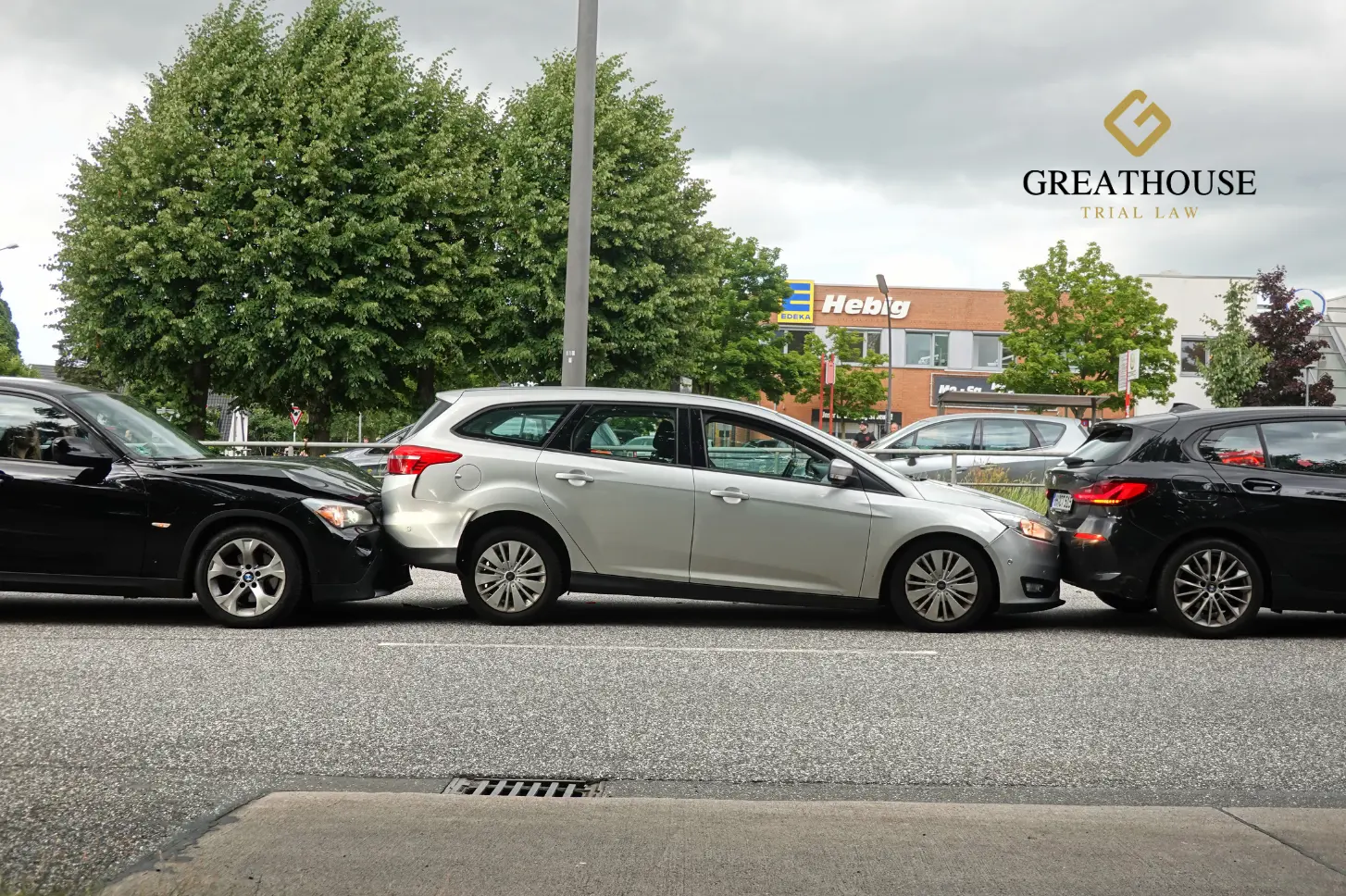
The 7 Common Types of Auto Accidents in Atlanta, Georgia
You don’t search for the types of auto accidents because you’re curious. You search because something just happened, and you’re trying to figure out where you stand. Maybe you were rear-ended in traffic on I-285. Another driver ran a red light and now both insurance companies are asking questions. Or you walked away thinking you […]
Read article →
When to Get a Lawyer for a Car Accident in Atlanta, Georgia
If you just had a car accident in Atlanta, here’s the honest truth: Most people wait too long to call a lawyer. Knowing when to get a lawyer for a car accident can protect your claim from the start. You might assume your insurance company will handle the medical bills and vehicle damage, or you […]
Read article →